Planning a group event on a party bus sounds like pure fun, but overlooking safety regulations can turn celebration into crisis fast. Over 5,400 fatal crashes involving large buses and trucks occurred in the US in 2022 alone. Most event planners never realize their rental vehicle must meet federal, state, and local rules before a single passenger steps on board. This article walks you through how commercial party bus regulations work, what federal and local requirements apply, how to vet any operator, and how to book with complete confidence.
Table of Contents
- What makes a party bus ‘commercial’ and subject to regulation?
- Key federal safety requirements for party buses
- Navigating state and local party bus safety rules
- How to vet operators and ensure compliance for your event
- The hidden risks most event planners miss
- Safer party bus experiences, stress-free planning
- Frequently asked questions
Key Takeaways
| Point | Details |
|---|---|
| Federal and state oversight | Party bus operators must comply with FMCSA, state, and local safety regulations—always double-check the specific rules for your event location. |
| Thorough operator vetting | Always verify the provider’s USDOT number, insurance, and inspection records before signing any contract. |
| Safety over savings | Choosing a compliant, well-documented operator helps prevent accidents and ensures a smooth, stress-free event. |
| Watch for modified buses | Interiors changed for parties must still maintain essential safety features; ask specifically about modifications. |
| Stay updated on new rules | Upcoming regulations like FMVSS 217a may affect vehicle compliance after October 2027—check for the latest updates. |
What makes a party bus ‘commercial’ and subject to regulation?
Not every large vehicle rented for a birthday or bachelorette party automatically triggers commercial transportation rules. The Federal Motor Carrier Safety Administration (FMCSA), the federal agency that oversees commercial vehicle safety, uses specific thresholds to define when a bus becomes a regulated commercial motor vehicle (CMV).
Passenger count is the primary trigger. Buses carrying 16 or more passengers (including the driver) are classified as CMVs regardless of whether money changes hands. Vehicles carrying 9 to 15 passengers fall under regulation only when the service is provided for compensation. That means a company charging for a wine tour shuttle is regulated, while a private group sharing a rented van might not be.
Modified interiors add another layer of complexity. Many party buses start life as standard coaches or school buses, then get gutted and refitted with LED lights, dance floors, and wraparound seating. These modifications can reduce total seat count, which may seem to push the vehicle below a regulatory threshold. However, the FMCSA and state agencies look at the original design capacity and structural classification, not just the current seat count. You cannot legally remodel your way out of compliance.
For planners using group transportation safety standards as a baseline, here is a quick breakdown:
| Vehicle type | Passenger count | Paid service? | Regulated? |
|---|---|---|---|
| Large party bus | 16+ (incl. driver) | Either | Yes, always |
| Mid-size shuttle | 9 to 15 | Yes | Yes |
| Mid-size shuttle | 9 to 15 | No | Generally no |
| Small van | Under 9 | Either | Typically no |
| Modified coach | Varies by state | Either | Check state rules |
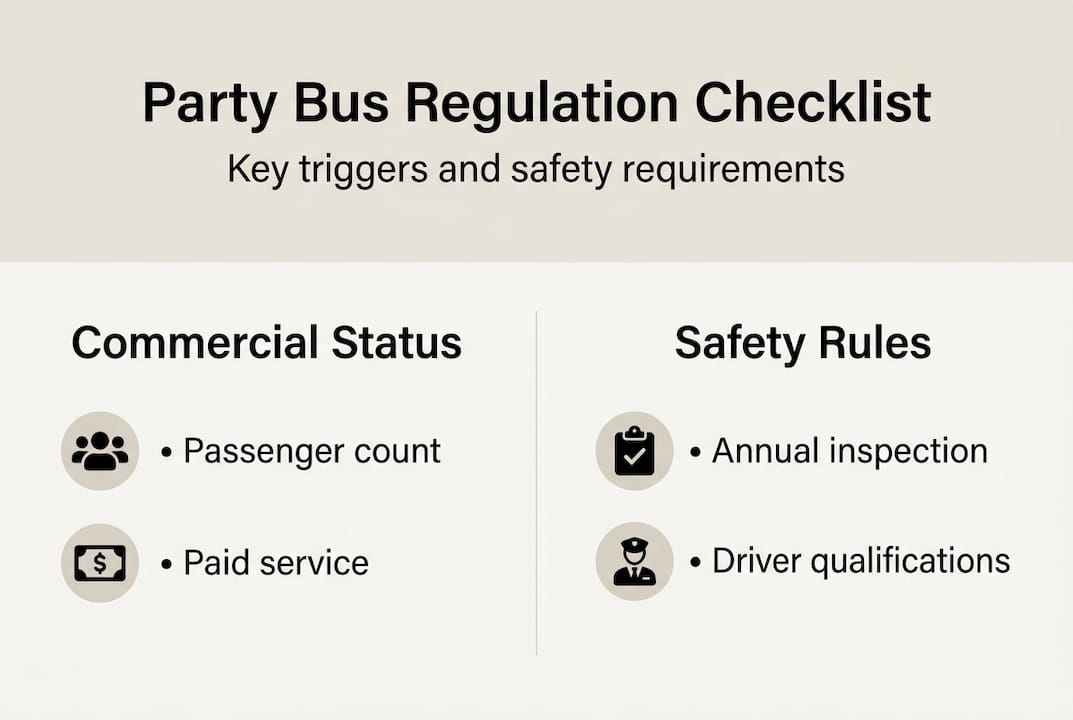
The bottom line: if you are booking a party bus for a paid event or a group of 16 or more people, federal regulations apply. Assume compliance is required first, and verify with your operator.
Key federal safety requirements for party buses
Once you establish that a vehicle is regulated, the next step is understanding exactly what federal law requires. The rules cover three areas: the vehicle itself, the driver, and how the operation is conducted.
Vehicle inspection and maintenance
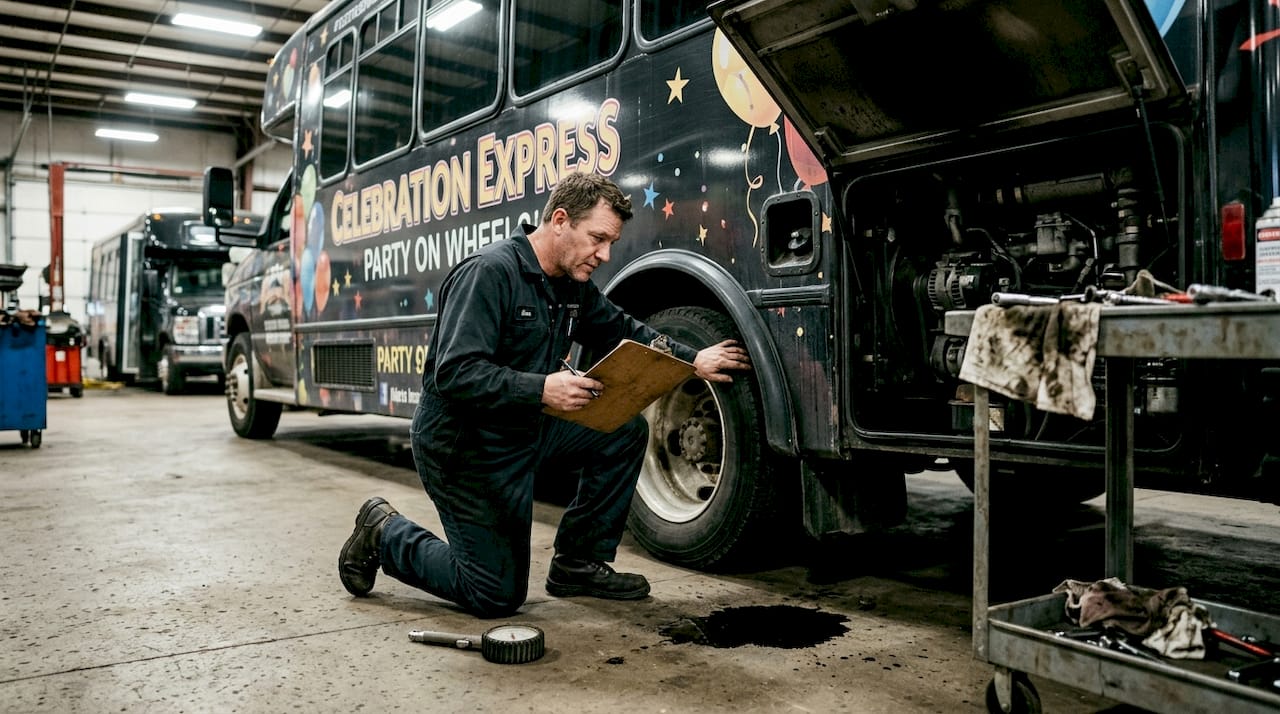
Federal law under 49 CFR 396.17 mandates annual inspections for all regulated buses, plus systematic preventive maintenance between those inspections. Operators must keep written inspection records and make them available on request. Any vehicle with a critical defect must be pulled from service immediately.
A new standard is also on the horizon. FMVSS 217a, which requires anti-ejection glazing on large buses over 26,001 lbs, takes effect in October 2027. This rule addresses one of the deadliest outcomes in bus crashes: passengers being thrown through windows. If you are booking large vehicles for events after 2027, ask operators whether their fleet will meet this standard.
Driver qualification standards
Federal rules require party bus drivers to hold the following, and you should ask for proof of each:
- A valid Commercial Driver’s License (CDL) with a passenger endorsement
- A current medical examiner’s certificate confirming physical fitness
- Enrollment in a DOT drug and alcohol testing program
- Compliance with Hours of Service (HOS) limits that cap driving time to prevent fatigue
Drivers must meet all CDL and medical requirements before operating any regulated party bus. Fatigue and impairment are among the top causes of commercial vehicle crashes, making these rules non-negotiable.
Pro Tip: Before signing any contract, ask the operator for their most recent annual inspection certificate, a copy of their operating authority, and confirmation that all drivers are enrolled in a drug testing consortium. Legitimate operators will share these without hesitation.
For a deeper look at how these rules apply to premium vehicles, review luxury vehicle safety compliance practices. If you are coordinating event transport compliance across multiple vehicles, these standards become even more critical to verify upfront.
Navigating state and local party bus safety rules
Federal rules set the floor. State and local rules often go much higher, and ignoring them can get your event shut down or leave you legally exposed.
State-level examples
Michigan requires an annual MDOT vehicle inspection for all buses operating commercially within the state, separate from federal inspections. Arizona takes a different approach, requiring operators to maintain detailed maintenance records, carry at least $750,000 in liability insurance for 9 to 15 seat vehicles, display proper signage on the vehicle, and pass driver background checks that go beyond federal minimums.
These are not minor administrative details. They represent real differences in liability exposure for you as the event organizer.
Local ordinances can stop your event entirely
City and county governments sometimes add restrictions that apply specifically to party buses. In Nashville, for example, local rules restrict party bus operation near schools and healthcare facilities. Routes that seem straightforward on a map may be off-limits depending on where your event is located.
Here is what to check at the local level before booking:
- Permitted operating zones and route restrictions
- Noise ordinances that apply to moving vehicles with sound systems
- Time-of-day restrictions on commercial vehicles in residential areas
- Local licensing requirements separate from state or federal registration
- Parking and loading zone permits for your event venue
“The safest assumption when booking event transportation is that local rules exist and differ from what you found online. A quick call to your city or county licensing office before the event can prevent a much more expensive problem on the day itself.”
For a thorough walkthrough of the planning side, our event transportation planning guide covers how to align your logistics with local requirements from the start.
How to vet operators and ensure compliance for your event
Knowing the rules is only useful if you can tell whether a specific company actually follows them. Here is a practical, step-by-step process for vetting any party bus operator.
- Look up their USDOT number. Every federally regulated carrier must have one. Verify it via FMCSA SAFER to confirm the company holds active operating authority. If they cannot provide a USDOT number, stop there.
- Check their Safety Measurement System (SMS) score. The FMCSA’s SMS tool rates carriers across categories like vehicle maintenance, driver fitness, and crash history. Lower scores mean fewer safety violations. High scores in any category are a red flag.
- Request recent inspection records. Ask for the most recent annual inspection report and any out-of-service orders. Legitimate operators keep these on file.
- Confirm driver credentials. Ask whether drivers hold current CDLs with passenger endorsements and are enrolled in a DOT drug and alcohol testing program.
- Review their insurance certificate. For large buses, federal minimums are $5 million in liability coverage. Confirm their policy is active and covers your event date.
- Ask about maintenance intervals. A quality operator will have a written preventive maintenance schedule. Vague answers or resistance to sharing records are warning signs.
Pro Tip: Search the company name in the FMCSA SAFER database before your first conversation with them. If their record shows a pattern of out-of-service violations or a lapsed operating authority, that tells you everything you need to know without wasting time on a sales call.
Understanding the benefits of licensed transportation will reinforce why this vetting process matters so much. If any terms in the operator’s contract are unfamiliar, our guide to event transportation terms breaks them down clearly.
The hidden risks most event planners miss
Here is the uncomfortable truth that most guides on this topic skip over: the cheapest party bus quote often reflects real shortcuts in safety. Party buses are frequently converted from older, poorly maintained vehicles, and conversion work done without proper inspection creates hidden structural and safety risks.
We have seen planners choose an operator based on price, skip the verification steps, and end up with a vehicle that fails a roadside inspection mid-event. Beyond the inconvenience, there is real legal exposure. If an unregulated or non-compliant bus is involved in an accident, the organizer who booked it can share liability.
The mindset shift that separates seasoned planners from first-timers is this: safety documentation is not a box to check. It is your primary filter for choosing an operator. Price is a secondary consideration. An operator with clean inspection records, active operating authority, and credentialed drivers may cost slightly more than a competitor with none of those things, but that difference is the cost of genuine risk management.
Always use the transportation safety guide framework as your starting point, not as an afterthought once you have already negotiated a price.
Safer party bus experiences, stress-free planning
Compliance research is time-consuming, and most event planners are already managing dozens of other details. That is exactly why working with a vetted booking platform makes such a difference.
At Party Bus Broker, every operator in our network holds active USDOT authority, carries appropriate insurance, and meets the federal and state safety standards outlined in this article. Whether you are coordinating event bus rentals for a corporate function or browsing luxury vehicle options for a milestone celebration, we match you with providers who are already compliant. For groups in Northern California, our Napa group shuttle services offer local expertise alongside nationwide reach. Book with confidence, not guesswork.
Frequently asked questions
What is the minimum insurance required for a party bus?
Federal minimums are $5 million in liability coverage for buses carrying 16 or more passengers. Some states go further: Arizona requires at least $750,000 for vehicles with 9 to 15 seats.
How do I check if a party bus company is compliant?
Verify their USDOT number using the FMCSA SAFER database, request recent inspection records and insurance certificates, and confirm all drivers hold current CDLs with passenger endorsements.
Are party buses with modified interiors still safe and legal?
Yes, provided that emergency exits, required signage, and structural integrity are preserved. Modifications must not compromise any federally mandated safety features, regardless of aesthetic changes.
What is FMVSS 217a, and when does it take effect?
FMVSS 217a is a federal standard requiring anti-ejection glazing on buses over 26,001 lbs to prevent passengers from being ejected in a crash. It takes effect in October 2027.
Do party buses have to obey local ordinances as well as federal rules?
Absolutely. Federal rules apply nationwide, but local rules in cities like Nashville impose additional restrictions that operators must follow wherever they are running routes.